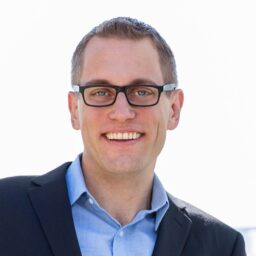
David Booth is the Chairman of Dimensional Fund Advisors (DFA), a firm he co-founded in 1981. David led Dimensional as CEO and later Co-CEO until 2017. Under his leadership, DFA grew from a fledgling business operating out of David’s Brooklyn brownstone apartment to a global investment manager with more than $1 trillion in assets under management and 1,600 employees. In September, David published his story in Stay Calm: Learn to Embrace Uncertainty in Investing and Life, a book in which he provides lessons on investing and life to help people build the right mindset behind building wealth.
Rick Ferri, a long-time Boglehead and investment adviser, hosts this episode. The Bogleheads are a group of like-minded individual investors who follow the general investment and business beliefs of John C. Bogle, founder and former CEO of the Vanguard Group. It is a conflict-free community where individual investors reach out and provide education, assistance, and relevant information to other investors of all experience levels at no cost. The organization supports a free forum at Bogleheads.org, and the wiki site is Bogleheads® wiki.
Since 2000, the Bogleheads have held national conferences in major cities across the country. In addition, local Chapters and foreign Chapters meet regularly, and new Chapters form periodically. All Bogleheads activities are coordinated by volunteers who contribute their time and talent.
This podcast is supported by the John C. Bogle Center for Financial Literacy, a non-profit organization approved by the IRS as a 501(c)(3) public charity on February 6, 2012. Your tax-deductible donation to the Bogle Center is appreciated.
Listen On


Transcript
Introduction
00:00:10 Rick Ferri
Welcome to the 99th edition of “Bogleheads on Investing.” Today our special guest is David Booth, Chairman of Dimensional Fund Advisors, a firm he co-founded in 1981 and has grown to $1 trillion in assets. We’ll discuss how his company used leading academic research from the University of Chicago to create the first small-cap index fund and pioneered multi-factor investing.
Hi everyone, my name is Rick Ferri, and I am the co-host of “Bogleheads on Investing.” Jon Luskin is the other host. This episode, as with all episodes, is brought to you by the John C. Bogle Center for Financial Literacy, a nonprofit organization that is building a world of well-informed, capable, and empowered investors. Visit the Bogle Center at boglecenter.net, where you will find a treasure trove of information, including transcripts of these podcasts.
One announcement before we get started: the 2026 Bogleheads Conference will be held Friday, November 13, through Sunday, November 15, at the Green Valley Ranch Resort and Spa in Henderson, Nevada, just a 15-minute ride from the Harry Reid International Airport in Las Vegas. There were 750 seats available, but unfortunately they are all sold out. But you can get on a waiting list at boglecenter.net. We will be announcing the 2027 conference date and location soon, so you want to make sure you sign up early for that.
These Bogleheads conferences are getting bigger, they’re selling out faster. It’s just an incredible event, and I don’t know how we do it, but somehow every year it just gets bigger and better. Hope to see you there. If not this conference, the next one.
In this episode, our special guest is an icon in the investment industry. David Booth is the Chairman of Dimensional Fund Advisors, a firm he co-founded in 1981 and led as CEO and later co-CEO until 2017. Under David’s leadership, DFA grew from a fledgling business, operating out of his Brooklyn brownstone apartment, to a global investment manager with more than $1 trillion in assets under management and 1,600 employees worldwide.
In September, David published his story in Stay Calm: Learn to Embrace Uncertainty in Investing and Life, a book in which he provides lessons on investing and life to help people build the right mindset behind building wealth. So it is an honor to have you on the show, David. Welcome to “Bogleheads on Investing.”
00:02:54 David Booth
Oh, thanks. Thanks for having me.
First Meeting
00:02:56 Rick Ferri
I mean, I’ve been a big admirer of you for years. You’ve built an incredible business at Dimensional. We first met back in the late 1990s when I went to Santa Monica and went through the two-day program there. I found it fascinating. You had Fama there, you had French there. Coming out of the brokerage industry and starting an RIA, I mean, it was a wonderful experience to actually get that level of education. You treated us, the advisors, like we were professionals. You treated us like we were equals to you. And I mean, out of the brokerage industry, I never had that experience before.
00:03:31 David Booth
Well, that’s very nice of you. Thank you. I think part of it is just the difference between people that want to help advisors and people that want to sell them something.
00:03:40 Rick Ferri
Absolutely. I came into this business in the late 1980s as a broker. And in that business, they only want you to know what they want you to know, and they don’t want you to know anything else. Sadly.
00:03:51 David Booth
Yeah, right.
Education
00:03:51 Rick Ferri
Yep. I’d like to start our discussion today by going back to the early David Booth. Before you were in the industry, you were one of the early pioneers of passive investing. You worked in the industry for a long time, first at Wells Fargo.
But let’s go back to the late 1960s. You were finishing a Master’s program at the University of Kansas. You decided to apply to PhD programs because you thought you might want to be a professor. You ended up going to the University of Chicago, but why didn’t you think about Stanford, Wharton, the University of Pennsylvania, MIT?
I mean, these were other top programs. What was it about the University of Chicago in the late 1960s that drew you to them?
00:04:45 David Booth
Well, there were a couple of things. First off, I took a finance course, which got me excited about finance and wanting to apply to a PhD program. And then my professor said, “Well, if you want to study finance, you’ve got to go to the University of Chicago.” I said, “Okay.”
Well, so I took his word for it. Then I realized, hey, that’s where he got his PhD from. So there was a bit of conflict of interest. But that’s part one.
Part two is the field was rapidly changing at the time. It was really emerging. All of a sudden, academics had data. They could research things they never researched before. And Chicago and MIT probably were the two biggest schools that were doing all this new research.
Landmark papers were coming out every month. It was amazing. And that excitement was really there clearly at Chicago.
00:05:36 Rick Ferri
And you were intending on getting your PhD and becoming a professor.
00:05:40 David Booth
Yeah, right. I enjoyed teaching and helping kids progress, helping out. And being a professor was a good way to do that.
00:05:51 Rick Ferri
Gene Fama, right at the beginning, was really influential in your career. The first course that you took at the University of Chicago was Fama’s Efficient Market course. How did that affect your thinking?
00:06:05 David Booth
Well, I mean, I think you started in Wall Street and then somehow felt dirty or whatever and ended up being.
00:06:12 Rick Ferri
Good word, dirty. Dirty is a good word.
00:06:15 David Booth
No, that was, yeah, your age of advisors that came in, that’s our initial financial advisors we worked with. That was pretty standard. They’re just glad to get out of that industry.
I, on the other hand, grew up initially in the farming community. And then in high school, I moved to Lawrence, where the University of Kansas is. So I’d live at home and go to school. So that was a bit of the background.
What I’m getting at is there wasn’t a lot of investment talk around the table. And so my first exposure to investing was Gene Fama’s course. And he outlined what it was all about and his view of the world. And I go, “Makes total sense to me.” I don’t know what the alternative is there, but that seems to be very clear.
The first year I took his course, it was two quarters, two courses. Then the next year I worked for him as a research assistant. And that was a great experience as well.
See, all these future Nobel Prize winners that were running around Chicago at the time, none of them had gotten their Nobel Prize. And you look at those large numbers, it had gotten a sense. So it was a pretty heady time with some unusually gifted people.
00:07:29 Rick Ferri
But there came a point in 1971 where you decided maybe going down the road of getting the PhD and becoming a professor really wasn’t what you wanted to do. Can you describe that transition?
00:07:45 David Booth
Well, yeah, there was a couple of catalysts for it. One was I went home at Christmas in my second year to my grandparents, paternal grandparents. They lived in a real small town. And they had a house with no central heating. So there was an outhouse, which is not the best thing in December in Kansas.
And I had all the relatives there. And I looked around the room and they were all having fun. They were happy. And I was totally I looked at myself and said, “You know, I’m stressed out. What’s wrong with this picture? I think I want to go down the be-happy route.”
So then I continued on pushing myself. Then I did this term paper for Milton Friedman. And he kind of treated it kind of ho-hum. And I go, “Oh, man. I’m killing myself.”
00:08:34 Rick Ferri
And you did that term paper with Roger Ibbotson.
00:08:37 David Booth
Roger Ibbotson, yeah.
00:08:38 Rick Ferri
Yeah, which was interesting because he did go on to finish and become a professor at Yale.
00:08:44 David Booth
Yale, right. Yeah. So I decided, “Hey, look, the world’s better off if people like Fama and Miller and Scholes, and all the group that was there at the time, if they do the research and I try to figure out how to apply the ideas.” Because these ideas were just way too important to be just left on the sidelines.
And nobody was wanting to apply them. And they can really help people, I thought. So I walked into Fama’s office and I said, “I’m going to leave the program.”
And he said, “Well, I have this guy out in San Francisco.” It was Mac McQuown. “He always wanted one of my students. So I’ll give him a call.”
And so he did. And Mac came to have dinner with me in Chicago and we hit it off. And that’s how I ended up at Wells Fargo in ’71.
00:09:34 Rick Ferri
I found it impressive that he flew out to Chicago just to have dinner with you and obviously meet Gene and so forth, but that he came out there to meet you. That was actually impressive.
00:09:46 David Booth
Yeah, well, yeah, I don’t know why he did it, but I’m definitely appreciative.
Early Indexing
00:09:51 Rick Ferri
Yeah. Anyway, you went out to California and you started working for Mac. And they had already created the first, call it, index-type portfolio, which they initiated for Samsonite Corporation.
And it was kind of an equal-weighted New York Stock Exchange fund that was really difficult to manage and really expensive to manage. And you kind of walked in on the middle of that.
And then they were also developing an S&P 500 portfolio that you really got onto. From what I understand from your book, you sort of became the frontman for that and was going around the country with that idea. It was called the Stagecoach Fund.
00:10:35 David Booth
Stagecoach Fund, yeah. That was a leveraged index fund.
00:10:38 Rick Ferri
A leveraged, yeah.
00:10:41 David Booth
And it never got off the ground. But the Trust Department, though, that was the other part of the bank, decided they wanted to do an S&P 500 index fund, which is what they did. It was slow-going for them at first, but then it really took off. And they sold it. That group got sold a couple of times and eventually ends up being the cornerstone for BlackRock.
00:11:06 Rick Ferri
Yes.
00:11:07 David Booth
Their iShares. The history of that, the antecedent, can be traced back to that Trust Department of Wells in 1971.
00:11:15 Rick Ferri
I interviewed Robin Wigglesworth for his book Trillions, and he actually has all of that background.
00:11:22 David Booth
Oh, yeah, right.
00:11:23 Rick Ferri
In there of how that happened, in quite detail too. So if people are interested in that transition from Wells Fargo over to what eventually became iShares. Sorry to interrupt. Just keep going.
00:11:34 David Booth
Well, I’ll just point out the group that I worked with, which really came up with the idea of the Samsonite account, how to manage that. The two consultants we worked primarily with were Fischer Black and Myron Scholes. And just a sidebar story in that is, while they were working on this indexing project, they developed the Black-Scholes option pricing model, which arguably is the biggest event in finance in the 20th century, I think.
00:12:05 Rick Ferri
And this is what they received their Nobel for.
00:12:07 David Booth
Yeah, right. Yeah.
00:12:09 Rick Ferri
Yeah. Well, at the same time, Rex Sinquefield, who was also a student at the University of Chicago, was at American National Bank, and they were also developing an S&P 500 fund. Were you in communication with him because you knew him at Chicago?
00:12:28 David Booth
Yeah, no, it was how we met was, well, go back to Roger Ibbotson. Roger Ibbotson and I, both, we were working for Gene Fama.
And on Fridays, we had a Q&A session for the students taking Fama’s class. And one of the students that would always show up was Rex Sinquefield. And he asked all the questions. So we got to know him well.
And then he and Roger went on to do what was kind of very important work, their annual book on rates of return on stocks, bonds, bills, and inflation.
00:13:04 Rick Ferri
The Yearbook.
00:13:05 David Booth
A yearbook, yeah.
00:13:06 Rick Ferri
It was a really great book. I remember getting it back in the early 1990s. It was a great book to look at and very instrumental to you in a few minutes when we get to the first portfolio that you launched.
00:13:20 David Booth
Right.
00:13:21 Rick Ferri
You were working there at Wells Fargo, and then you left Wells Fargo to join Becker Securities as an institutional pension consultant. What was the catalyst for you deciding to leave Wells Fargo?
00:13:39 David Booth
Well, you know, at that time, I studied finance and investments. From an academic side, I needed more exposure to the real world, how people actually thought and managed funds. So it was a great learning experience.
Small Caps
00:13:55 Rick Ferri
And in the summer of 1980, you suggested to Becker Securities that the S&P 500 is great, but we should extend this beyond the S&P 500 to maybe the S&P 500 plus 150 more stocks. Can you describe how they reacted to that? I mean, it seemed like they were interested in it, but they never really followed through with it.
00:14:22 David Booth
Well, they didn’t want to be in the money management business. They wanted to be either a consultant or the other part of their firm was they worked with commercial paper. They were a big commercial paper house. So this wasn’t something in there that they had a big interest in.
But I’d done this project for AT&T, which at the time was the biggest pension fund in the world. I’d helped them develop an S&P 500 index fund in-house that they ran in-house. And then I said, “Why don’t we do the stuff, the smaller ones, the ones outside the S&P 500?” And they eventually got excited about the idea and did it.
And then when I shared it with people around the firm, people go, “Wow, that is a cool idea.” And I go, “Well, if people like it, I mean, there’s a business in this.” And Becker wasn’t interested.
So a couple of us, Larry Klotz and I, and then Rex got wind of what we were doing and said that’s what he thought he would be interested in doing too. And so we just kind of quickly formed a company and got started. And our first strategy was this small-cap fund.
00:15:30 Rick Ferri
Yeah, and that whole evolution was interesting because you say in the book several times that the term small-cap wasn’t even a thing. I mean, nobody was calling them small-cap.
00:15:39 David Booth
Yeah, in the early years, people go, “Well, some of these small-cap firms are really big firms. They just have a small market.” Forget the argument.
Eventually, this access to academics paid off right away. When we decided to start the firm, my first phone call really was to Gene Fama. And I said, “Look, we’re going to need help with research, academic research. Would you like to join us in forming the fund?”
And so he was one of the founders and still works very closely with the firm all these years later.
00:16:12 Rick Ferri
He actually said, “Look, if you’re going to go down the road of doing small-cap, you really need to read this yet-to-be-released research paper by a University of Chicago student, Rolf Banz.”
00:16:26 David Booth
Yeah.
00:16:27 Rick Ferri
This was now gold in your hand, correct?
00:16:31 David Booth
Well, it was gold for a lot of reasons. One is we didn’t have the money to do the research ourselves. And two, Banz had gotten his PhD, so he had defended his work.
So with the data, he had the scrutiny of all these professors and survived and got his degree. So we knew the data were good.
The funny thing there was when the idea for the firm took off, we actually got commitments from people to invest in our fund, which was yet to be created and managed by us at a firm that had yet to be created. So the funny thing, we had clients before we had the data and before we actually had a firm.
It shows you the power of ideas. If you have really a great idea, you can be surprising in the way you start.
00:17:19 Rick Ferri
So the Banz paper divided the New York Stock Exchange up into 10 deciles. Decile one was the largest 10% by number, like 150 stocks. And number two was the next 150 stocks, all the way down to 9 and 10, which were the bottom, 150, 150.
And here is where you said, “Well, if we’re going to do a small-cap fund, let’s just buy from the 9th and 10th decile, those 300 names.” So that was your original 300 list. And they were all New York Stock Exchange funds at the time.
00:17:58 David Booth
So we called it the smallest quintile of companies. So we called it since it was based on the 9th and 10th deciles, we weren’t too imaginative. We created the name 9th and 9/10 Fund. We didn’t have a lot of money to spend on figuring out a name. And that’s how we got started.
00:18:17 Rick Ferri
Again, you were just coining the words small-cap at the time. I mean, later on, this became known as micro-cap.
00:18:22 David Booth
Right.
00:18:23 Rick Ferri
So here’s where the story really gets interesting because you wrote in the book that you visited Jack Bogle before launching Dimensional to get back office operations support, calculate NAV, to reconcile trades.
You needed these daily things done, and you didn’t have the resources to actually be able to do all of that work.
And now Jack was helped by Rex and Mac when he started his S&P 500 fund. And so he was very familiar with all of you and what you were doing.
And so he offered to help. So tell us about that meeting.
Jack Bogle
00:19:06 David Booth
Well, that’s right. Well, you kind of alluded to one of the interesting things about this point in time is that those of us who were trying to do passive management, everybody kind of knew each other and everybody was helpful to each other rather than being competitors necessarily.
So we knew we wanted to do a mutual fund. And we knew we didn’t know anything about running a mutual fund. So I approached Jack and said, “Why don’t you do all these administrative functions that are important and require a staff that we don’t have? Why don’t you do that for us and for a fee?” He said, “Oh, okay.”
And so then we chatted a bit further. And then he goes, “Well, you know, one of the things you’re going to have to have is a good law firm. Here’s the firm we use. Here’s the partner’s business card that I deal with. I’ll call him up.” Which was valuable because we started the firm, we were working out of my apartment. So big-name law firms are not all that interested in working with a startup firm operating out of their apartment. So that was very helpful to begin with.
So then we met with the lawyer, and the lawyer said, “Well, you’re going to have to have an independent board of directors for this mutual fund.” I go, “Oh, I’m, no kidding.”
So we were on campus at the time at the University of Chicago. So we just walked over to the faculty building, and Merton Miller was in. Merton got his Nobel in 1990. And I said, “Merton, I need your help, independent director.” And he goes, “Okay, good.” So he knew we were trying to do stuff that he believed in.
So then we walked out of his office, and walking down the hall, Myron Scholes was coming the other way. He goes, “Hey, Myron, we need your help as an independent director.” And he goes, “Well, how much are we going to get paid?” I go, “Myron, we’re talking about you being an independent director. It’d be unseemly for us to pay you anything. And besides, we don’t have any money.” He said, “Oh, okay.”
00:21:16 Rick Ferri
I mean.
00:21:18 David Booth
So that’s how we got started working with academics. Then we filled in, it turns out all the independent directors we’ve had over the years have been leading academics. So it’s been a thrill because first off, the role of an independent director, you want people that are knowledgeable to monitor the manager. I mean, no better than this group. So I mean, they’ve provided a valuable function, and we’ve learned a lot from them as well.
00:21:45 Rick Ferri
So there you are. You’re ready to get started.
00:21:47 David Booth
Yeah.
Early Investors
00:21:48 Rick Ferri
You’re ready to go. You’re ready to launch the fund. You launch it on December 21st, 1981. And you start bringing in investors into the fund. Now I have to stop here and ask you. Arnold Schwarzenegger is affiliated with Dimensional Fund Advisors. How did Arnold Schwarzenegger come into all of this?
00:22:12 David Booth
Oh, that’s years later.
00:22:14 Rick Ferri
Oh, it is.
00:22:15 David Booth
When we started the firm, we had a little bit of risk capital provided by Schroders Capital Management out of London. They had a 15-year deal. In 1996, their deal ran out.
And so we realized if we bought them out, we could bring in individual investors and convert from a C Corp to an S Corp, because that means an S Corp gets taxed like a partnership. And when we converted to the S Corp, it brought in individuals.
One of the individuals worked at Schroders and managed the money for Arnold Schwarzenegger. And so when we bought out Schroders, he wanted Arnold to participate in that. That’s how we got to know Arnold well and how he got involved with the firm.
00:23:02 Rick Ferri
So let’s go back to the early 1980s. The firm starts to build. You start to bring in clients. Larry Klotz left fairly early.
00:23:10 David Booth
It was about ’85, I think.
00:23:12 Rick Ferri
Oh, okay. So he was there for quite a while.
00:23:14 David Booth
Yeah, yeah.
Santa Monica
00:23:15 Rick Ferri
Tell us about the move from your apartment to Santa Monica.
00:23:18 David Booth
So Rex and I decided we really need to have an office together. He didn’t want to come to New York, and I didn’t want to go back to Chicago particularly. So we decided on Santa Monica.
00:23:30 Rick Ferri
That was it?
00:23:31 David Booth
That was it.
00:23:32 Rick Ferri
I mean, that’s how you did it?
00:23:33 David Booth
Yeah. It was surf city, here we come. We only had about a dozen people in the firm, so it was easy to pick up and move. That’s how we ended up in California. So that was ’85. In 2008, we moved the headquarters to Austin, Texas, which is where I am now.
00:23:52 Rick Ferri
So Santa Monica, that’s where I went through DFA training, if you will, in mid-’90s. But you didn’t have a whole lot of room there. You were growing very rapidly. A beautiful location, though. I mean, overlook the ocean.
00:24:07 David Booth
Yeah, right.
00:24:08 Rick Ferri
And I know you left some people there when you created, when you built the two buildings in Austin.
00:24:14 David Booth
Yeah, we still have about 125 people in Santa Monica. Yeah, yeah.
Micro-cap Market Impacts
00:24:18 Rick Ferri
Oh, there are. Let’s keep talking about the 9/10 portfolio because there started to be some issues with the 9/10 portfolio.
And it’s because you were trying to buy these small-cap, micro-cap companies. I mean, there wasn’t a lot of liquidity.
So the one thing that you did early on, and you talk about it in the book, is you were going out, I guess you were the portfolio manager, I assume. You were going out and trying to buy these 300 companies. And then you got a phone call that said, “I want to sell you 5,000 shares, not 500.”
00:24:54 David Booth
Right.
00:24:55 Rick Ferri
And that conversation kind of changed your whole perspective of trading. Can you talk about that?
00:25:01 David Booth
Yeah. Yeah, it was a pivotal moment. I mean, the concern people always had when we described our 9/10 fund, now we call it the micro-cap portfolio now, was, “Okay, look, I understand that’s a very exciting idea, investing in small-cap. But you’re going to the marketplace, and you know you don’t have any undiscounted information. You’ll be trading against investors that think they know that they do have undiscounted information. Why won’t they just bag you in trading, stick you with stuff at horrible prices?”
There’s no theoretical answer to that. It’s just an empirical answer. I mean, let’s try it and see if that’s what happens. And there was kind of almost a miracle, which you kind of alluded to, which is we started trading, putting out orders to brokers, have them work the trades. And then we started getting phone calls coming in offering big blocks of stock. And so maybe we wanted to buy 500 shares, and we were offered 5,000.
I go, “Well, we understand competition from Econ 101. What we need to do is create some competition here.” And we go, “Okay, well, if we buy 5,000, our portfolio, we can accommodate that. We’re slightly overweighted in the company now. That’s fine as long as we can get traded at a better price. So what can you do for me on price?” And we were able to go on a path of buying blocks at discounts, which shows up eventually into a value add for our clients.
00:26:49 Rick Ferri
Yeah, absolutely. I mean, you trade another 100 shares at whatever the ask price is, and all of a sudden, you’re at 5,000 shares. That’s pretty good.
00:26:57 David Booth
Yeah, right. So to give you an idea, we’re closing in on 45 live years of that fund. And it’s outperformed the Russell 2000, which is the benchmark most people use, after fees by about 150 basis points a year for 45 years, which, given the magic of compounding, it leads to a huge difference in terminal wealth between the straight index or our fund.
So we learned a lot. The flexibility we have in trading and flexibility of, well, that’s actually an implication of the Black-Scholes option pricing model is flexibility has economic value. We were able to turn that into a real-life experience.
00:27:51 Rick Ferri
By the early 1990s, you were taking in a lot of money. You were very successful. There was tracking error with the fund versus the 9/10 portfolio because you were buying these different blocks, and your portfolio looked a little bit different than the 9/10 portfolio because it was a real live portfolio rather than a theoretical portfolio.
So there was tracking errors, but you were certainly getting this small-cap premium that Banz had discussed, and you were outperforming that even at the time because you were doing something novel. But there comes a point where you own everything. You own all 300, and now you’re getting up to IRS regulatory issues because you own 10% of each of these individual companies, and you were getting to capacity issues.
But then CRSP, who you were getting your data from, added in Nasdaq stocks. They started dumping the Nasdaq, if you will, into this decile structure. And now this gives you a whole bigger playground to play in than 300 stocks.
00:29:01 David Booth
Yeah, we approached CRSP, actually, which is for people, it’s the research quality database that all academics use to do their research, basically. Now owned by Morningstar. And at first, they just had New York and American stock exchange stocks. And we approached them, and actually, we funded the inclusion of the Nasdaq data.
00:29:30 Rick Ferri
Oh, was that right? That’s interesting.
00:29:33 David Booth
I thought that we would be able to do a research paper, and probably the conclusion would be that Nasdaq stocks had higher average returns because they were riskier by some sense. That was conventional wisdom.
But it turns out, years later, in ’91 or ’92, Fama and French come up with a new paper that said, “No, it’s because these are more like value stocks. That’s why they outperform.”
But anyway, it was a breakthrough. And then we decided, “Well, okay, we’ll take the largest 1,000 companies and call those large. Anything below the largest 1,000, we’ll call them small.”
00:30:20 Rick Ferri
Similar to what Russell was doing at the time.
00:30:22 David Booth
Yeah, right. So we have a variety of portfolios. So you can have a small or really small, whatever you need.
00:30:32 Rick Ferri
But there were these capacity issues, and there were these other issues with owning too much of one stock. And so you were looking at this, “How are we going to fix this?” And you did some operational things that fixed it.
00:30:46 David Booth
Well, yeah, it was also led into capacity was a concern there. In fact, for half a dozen years, we limited institutional investors into our funds because we knew we had to have a value added or we didn’t have a business. If we can’t beat an index fund, we’re in trouble. And trading was a big part of it.
Three-Factor Model
00:31:11 Rick Ferri
Well, as it turned out, during this period of time when you were kind of facing these capacity issues, something wonderful happened, if you will. I guess you could put it that way. Gene Fama and Ken French came out with their paper on three-factor model, which put you in a whole nother dimension. Oh, by the way, I have to say, whoever decided on the term Dimensional, I love that name. I mean, it’s a great name.
00:31:37 David Booth
Well, thank you. Actually, what happened was, first, what we called what we did, an index fund, because in 1981, an index fund didn’t necessarily mean zero tracking error. That S&P 500 fund that Rex ran at Chicago, I can get 350 stocks in it. So there was some tracking, so tracking error wasn’t quite the bugaboo it is today. So as you mentioned, the Fama and French research comes out, and it ties into some academic work, theoretical work done by Bob Merton 20 years earlier. Bob Merton, who’s our resident scientist, by the way, another Nobel Prize winner, developed this theory.
He said, look, at that time, the conventional risk model that academics used was the Capital Asset Pricing Model, which said risk is beta, beta being the relative fluctuations of a stock or portfolio. A beta of 1.5 suggested that short-term fluctuations would be about one and a half times whatever the market fluctuation was. Anyway, that was a great theoretical model.
It had one drawback. It didn’t ever describe reality. You could never seem to get high beta stocks to have the kind of return that he thought they should. So we have this theory that there could be multiple sources of risk that comes from Bob Merton, the multi-factor.
And along the ways, we were getting started. So we call ourselves a small-cap index fund. But then in the early ’80s, people still weren’t convinced about indexing. So I said, “I just made up the term dimensional. We’re going to create a small-cap dimensional fund.” And everybody goes, “Oh, man, that is cool.”
00:33:30 Rick Ferri
It is a great name.
00:33:31 David Booth
Great name. But academic research is actually focused on, they kind of call it factor.
00:33:37 Rick Ferri
Oh, sure. Factor.
00:33:38 David Booth
Instead of dimensional.
00:33:40 Rick Ferri
Quantitative factor.
00:33:41 David Booth
Yeah, right. I like dimensional myself.
00:33:43 Rick Ferri
Anyway, so you’re looking at this, and you’re saying, “Wow, this is a new line of funds to manage using this three-factor equation.” And the way I looked at it was, “Well, this is kind of an answer to the micro-cap issue problem where you’re reaching capacity. Now you got a whole different dimension.” Again, there’s the word dimension again, where you could go with this, and you did.
00:34:10 David Booth
Well, that’s right. I mean, what the research showed, fortunately, that one factor that explained differences in return was size of market cap, small versus large. So bingo. That meant that we inadvertently started the first factor fund without knowing it.
00:34:28 Rick Ferri
Yes.
00:34:28 David Booth
Okay. The other dimension was.
00:34:31 Rick Ferri
The father of factor investing. There you go.
00:34:33 David Booth
There you go. Yeah. But the other basic dimension was price of stock, low-priced stocks versus high-priced stocks, which in the parlance of practitioners was value stocks versus growth stocks.
Growth stocks selling at high prices, value stocks selling at low prices. So that led to the creation of all our value strategies.
So now we have large-cap and large value, small value. And that enabled people to create portfolios. If you start with a market portfolio, you can decide how much you want to go towards small or value, depending on how much you believe the research.
00:35:16 Rick Ferri
Somebody came up with the term load, loading, factor loading, small-cap loading, value loading. It wasn’t value. It was book-to-market, but still got the right idea. Who came up with that idea?
00:35:28 David Booth
Well, it follows really from the linear regression that they used to test all the stuff out, the slope coefficient in the linear regression. He called that the loading factor.
So for the first time, we could take all of somebody’s equity portfolio, and depending on how they wanted to tilt towards small or value, they could.
And then eventually, over the last half a dozen years, that’s really led to no loading. We have market portfolios now that are totally neutral with respect to size and value, capitalization weighted.
So the only difference between us and an index fund then is just how we do execution on trading and dealing with market mechanism.
00:36:19 Rick Ferri
Sure.
00:36:19 David Booth
So we have plain vanilla. We have tilted, however you want to tilt it. And then we took all of that internationally in the developed markets and then eventually into emerging markets. So we have oh, and by the way, in ’83, I overlooked, we started our fixed income based on research of Gene Fama.
00:36:42 Rick Ferri
And this was looking at the yield curve and determining whether there were kind of bumps in the yield curve and you were going to buy there and so forth. I remember the paper.
00:36:49 David Booth
Yeah, right. So depending on the shape of the yield curve, we’d either extend or shorten maturities. So that’s basically our product lineup with, it was really shaped in 1992.
00:37:04 Rick Ferri
And it was great timing too, by the way, because value stocks, at least sort of the value premium super cycle is what some people refer to it, which hit when the tech wreck started in 2000 to 2007. Value stocks, they had their super heyday, especially small-cap. I remember because I had an investment advisory company at the time, and I was getting calls every single day, “Get me into DFA funds now!”
00:37:37 David Booth
Yeah, right.
00:37:37 Rick Ferri
And everybody was clamoring for DFA because you could only get it through an advisor at that time.
00:37:44 David Booth
Right. We had a different business approach at first. Jack Bogle and Vanguard went down, they wanted to make all this stuff available to individuals. And I go, “That’s terrific, Jack. I mean, well, we don’t know anything about selling to individuals.” Until about 1990, we only sold to large institutional investors. And then instead of selling directly to people, we started working with their advisors.
00:38:15 Rick Ferri
This is when Dan Wheeler came.
00:38:16 David Booth
Dan Wheeler came in.
00:38:18 Rick Ferri
I say Dan Wheeler because Dan is a marine, and I’m a retired marine myself.
00:38:23 David Booth
Oh, okay.
00:38:23 Rick Ferri
Anyway, he was a great guy, good speaker.
00:38:25 David Booth
Great speaker. And now that’s a bigger part of our business. It’s bigger than the institutional business, which is kind of cool. It just goes to show you have to be adapt and be flexible.
Dimensional ETFs
00:38:38 Rick Ferri
Speaking of being adaptive, let’s move into ETFs. I want to talk about the ETF world in a couple of different ways. DFA, I thought, was slow to get into exchange-traded funds.
Now, maybe this had something to do with working with advisors, and you didn’t want to work with individual investors, and ETFs go direct to the public. I wrote an article. I don’t know if you ever heard of it, but back in like 2001, I called Time for DFA to ETF.
00:39:15 David Booth
Yeah, right.
00:39:15 Rick Ferri
That was the name of the article.
00:39:17 David Booth
Yeah, okay.
00:39:18 Rick Ferri
And you remember Gene Fama and Ken French published an op-ed in the Wall Street Journal that was like 2006 talking about the tax advantages of ETFs. So I said, “Okay, here it comes. It’s coming now.” But it really didn’t come for a long time. Can you tell me, why didn’t you get into the ETF business earlier?
00:39:37 David Booth
Well, part of it was the attitude Jack Bogle had, which was there’s a concern that are we turning investing into a Las Vegas, I mean, a gambling machine with all the plethora of ETFs that are coming out?
ETFs have some operational advantages if you already have a brokerage account, for sure. But we were able to, the tax advantages of ETFs, by and large, we were able to equal those with improving our technology of trading and so forth in our regular mutual funds.
But eventually, people go, “Okay, that’s very interesting, but I want an ETF.” So eventually, we were forced into having ETFs. And there, of course, we didn’t just have any ETF. We made the biggest conversion ever from a regular mutual fund to an ETF.
And now we have all kinds of ETFs, and we’re merging ETFs. We have the ETF share class like Vanguard pioneered whatever it was 30 years ago. And the reason we have them all is people have different preferences.
So our goal is to make it available any way you want it. Do you want a regular mutual fund, an ETF? We’ve got our separately managed account.
00:40:49 Rick Ferri
And a lot of advisors are using ETFs now. I mean, when you were doing the, when I went there in the 1990s and early 2000s, I mean, most advisors were doing mutual fund marketplace at Schwab or Fidelity. They weren’t doing exchange-traded funds because there really weren’t that many. Now, advisors, by and large, are doing almost all ETFs, not all of them, but.
00:41:11 David Booth
Well, I mean, clearly, the big flow has been away from the regular mutual fund into the ETF. The flows are staggering.
Tax Efficient Investing
00:41:19 Rick Ferri
But I have to get into this with you because this is something that just happened this month, actually. It has to do with the IRS and the Treasury Department now looking at some of the ways of which portfolio managers are doing tax-efficient investing.
You are doing direct indexing at Dimensional now, which is trying to do tax loss harvesting in a portfolio for a client by buying 500 stocks or whatever many stocks it is that you use, and doing dividend management as well, and doing all the things to try to reduce taxes in a separately managed account.
But one of the things that has become popular is once the client doesn’t need that tax loss anymore, is to take the portfolio and do a 351 exchange of this portfolio into a newly formed ETF, which would be a registered investment company, and be able to do that as a tax-, kind of a, deferred exchange. I mean, you’re not eliminating the taxes because they go along with the portfolio.
And another University of Chicago graduate, Wes Gray from Alpha Architect, I know.
00:42:38 David Booth
Meb Faber from Cambria is doing this.
00:42:41 Rick Ferri
I’ve been told that Dimensional did a couple of these 351 exchanges for some large institutional clients. I mean, there are other people that are doing them now. But now the IRS looks like is saying no to some of the transactions in a 351 and some of the ways that companies are doing them. What can you tell me about it?
00:43:02 David Booth
Well, I think they’re, rightfully so, they’re looking at it with a lot of scrutiny. And I think there are some 351 exchange funds that are vulnerable if the IRS wanted to go snoop and look at how they actually turn out to be managed.
The rules were set up somewhat vague, which has allowed some managers to really push it way beyond what the intent was. And I think the IRS is going back and applying some scrutiny to those funds.
And what’s scary there is that it’s the individual investor that exposes themselves to an IRS audit more than the fund. Usually, when you have a problem with a fund, it’s the fund, the fund has to come up with a solution. In this case, it’s the clients that go into the fund.
So I just hope that these people that invested in 351 exchange-type funds, I hope they are confident that their manager did it the right way.
00:44:07 Rick Ferri
It’s going to be interesting to see. They’re in a period asking for comments from the industry. Do you know if DFA is going to submit a comment?
00:44:16 David Booth
Yeah, I’m sure we will. We always comment on these things. I mean, a lot of actually, we’ve had a big influence on rulemaking over the years. Going back way, remember market timing, the Eliot Spitzer era?
00:44:34 Rick Ferri
Oh, yeah. Sure.
00:44:36 David Booth
Where, people, you could trade on stale prices.
00:44:40 Rick Ferri
Yeah, that was the international fiasco where people were buying international funds at NAV at the close and knowing what it was already opening up at some different price later on. Yeah, I remember.
00:44:51 David Booth
And the way to offset that is fair pricing. And at the time, the SEC didn’t want you to do fair pricing very often. We came up and said, “Look, we want to do it every day because of this problem.” And we were able to flip the SEC to where they now insist that you do it every day.
And then this whole share class of ETF, we’ve worked with the SEC to come up with a way of doing that, even though Vanguard had done it 30 years earlier.
00:45:22 Rick Ferri
ETFs as a share class of a mutual fund rather than just a standalone ETF.
00:45:26 David Booth
Right. Yeah. So we were able to bring that back and innovate on that. So the devil’s in the details, but I think this 351, if you’re an advisor, I think you just want to make sure you look at the funds you’re using and make sure the manager didn’t push too hard on the IRS rulings.
00:45:46 Rick Ferri
The IRS notice 2026-62, which just came out, actually talks even more, there are different strategies. Talks about funds that are using box spreads as a way to avoid paying ordinary income tax and pushing it off to long-term capital gain tax, through an ETF. They were specifically looking at using the ETF structure to avoid or delay taxes.
And then there was a dividend avoidance portion of that notice also where funds were selling stocks right before they went ex-dividend and then buying them back as soon as they could to avoid the dividend, therefore lower the taxes taxable investors had to pay at the end of the year. The notice specifically talked about that as well.
So this is really much even deeper. They were looking at everything here in this ruling. So it’s going to be interesting what the final word on this is. But they are looking for comment from the industry through the end of this month.
00:46:56 David Booth
Yeah. I’m sure we’ll comment on it. The main thing is, I think the general rule is don’t try to be a hero here and do something really outrageous. Stay within what the rules and the intent of the rules are, and over the long haul, you’re going to be okay. We’ve never been sanctioned by the SEC or the IRS, and don’t plan on being sanctioned.
Future Plans
00:47:22 Rick Ferri
So what’s next for David Booth? You’ve been in this industry for 60-some-odd years. You’ve built a trillion-dollar asset management company. You’ve donated very heavily to several academic institutions, including your alma mater, but others as well: UT here in Austin, and others. So I mean, you’re really involved with the academic side. What’s on your agenda for yourself?
00:47:54 David Booth
Well, it probably even ties way back to why I wanted to be a professor. I mean, some people like to help others. Some people don’t like to do that. I really get a kick out of helping others. And that’s how I’ve used the philanthropy.
And that’s really, in some sense, the connection I think we have with even Vanguard, which is we’ve built a firm around implementing these ideas that can really help people. And we’ve done that over 45 years. And Vanguard has done a good job of helping people.
And in some sense, I mean, Jack deserves all the credit he gets. I mean, that’s a form of philanthropy that goes unnoticed. I don’t know if we have time to tell a story about the last time I saw Jack.
00:48:44 Rick Ferri
Sure. Go ahead.
00:48:45 David Booth
So they started off doing all of our kind of, call it back-office work. And after a few years, they decided they didn’t want to do it anymore, which was fine. By that time, we were trained on how to run a mutual fund.
So I ran into Jack a couple of months before he passed away. And I said, “Hey, Jack, let me buy you a cup of coffee.” So he sat down, and I go, “Hey, when we started the firm, you really helped us out tremendously. I don’t know what we would have done had you not decided to help us out. But I just want to make sure you know I want to say thank you. So thank you, Jack.”
And I was so happy because a couple of months later, he passed away. And that day, I went down to our studio and did a little video explaining how Jack had really helped us out and how important he was. I was glad I did that.
00:49:40 Rick Ferri
Well, David, I want to thank you so much for being on our podcast, Bogleheads on Investing. I’m sure that Jack would appreciate you being on here as well. We try to get good information out to people just like you’re trying to get good information out, and Vanguard is as well. So. Good luck with the book, and thank you again.
00:49:57 David Booth
Okay. Well, thank you. I enjoyed this.
Wrap Up
00:50:00 Rick Ferri
This concludes this episode of Bogleheads on Investing. Join us each month as we interview a new guest on a new topic. In the meantime, visit boglecenter.net, bogleheads.org, the Bogleheads Wiki, Bogleheads Twitter, the Bogleheads YouTube channel, Bogleheads Facebook, Bogleheads Reddit. Join one of your local Bogleheads chapters and get others to join. Thanks for listening.